
Back to Blog
DeFi Education
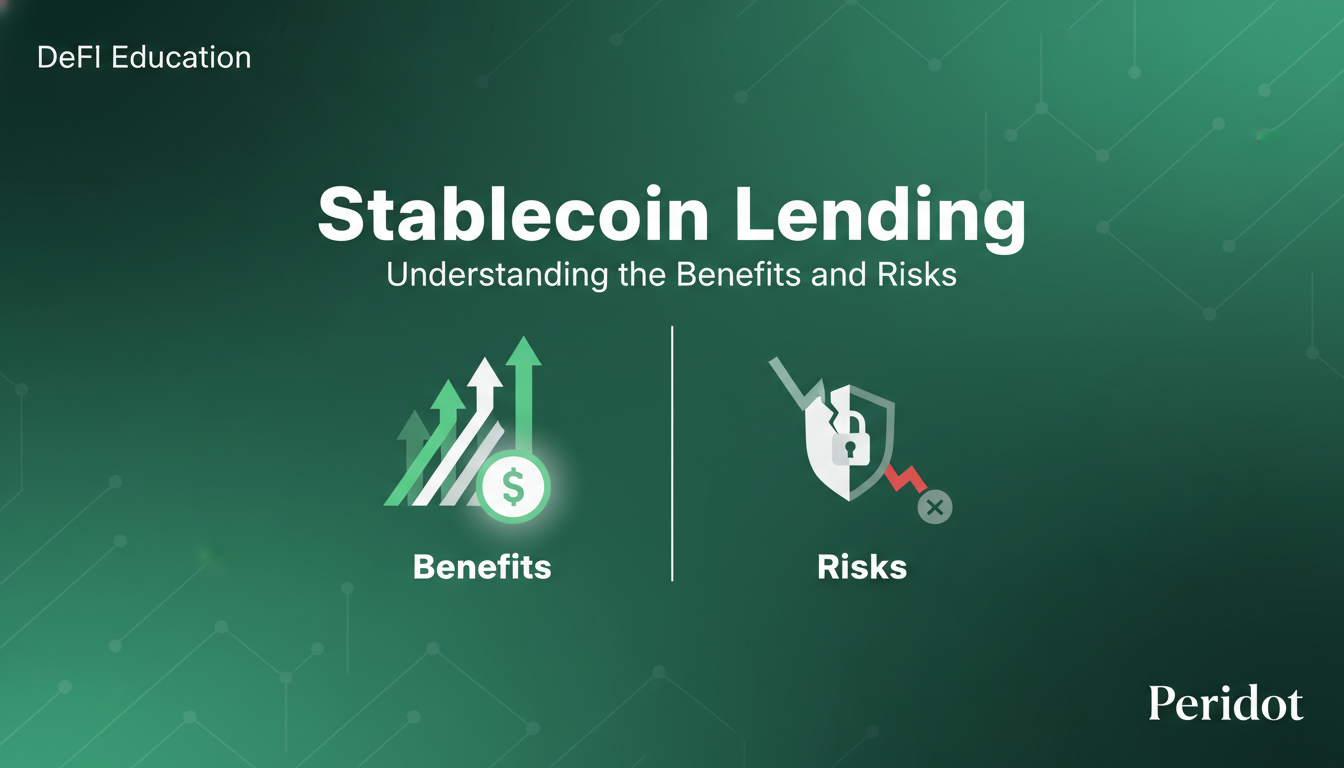
Stablecoin Lending: Understanding the Benefits and Risks
Alexander Meyer
November 16, 2025
6 min read
🤖
Explore this content with AI
Ask questions about this article using your favorite AI assistant. We copy the prompt for you and open a new tab.
Alexander Meyer
Alexander Meyer is a DeFi expert with over 5 years of experience in blockchain technology and decentralized finance. He has written extensively about cryptocurrency and DeFi protocols.
Frequently Asked Questions
What is stablecoin lending and how does it work?
Stablecoin lending involves depositing stablecoins into a decentralized finance platform where others can borrow them. Borrowers pay interest on these loans, and lenders earn yield from that interest. The process is managed by smart contracts, which automate transactions and enforce rules without intermediaries.
What are the main benefits of lending stablecoins?
Lending stablecoins allows users to earn interest while holding assets that have low price volatility, providing a stable source of yield. It also improves liquidity in the crypto ecosystem, making it easier for others to borrow and use these assets. This approach offers a way to generate passive income without exposing funds to dramatic price swings.
What risks should I be aware of when lending stablecoins?
Key risks include smart contract vulnerabilities, which could lead to loss of funds if the code is exploited. There is also liquidation risk if borrowers fail to maintain required collateral, potentially affecting the liquidity pool. Additionally, platform risk and market conditions can impact overall safety and returns.
How do smart contracts impact stablecoin lending safety?
Smart contracts automate lending operations and reduce the need for intermediaries, but they must be secure and well-audited. If a smart contract contains bugs or security flaws, it can be exploited by attackers, resulting in loss of funds for lenders. Therefore, choosing platforms with strong security practices is important.
Can I lose money by lending stablecoins?
While stablecoins aim to maintain a stable value, lending them carries risks that could lead to losses, such as smart contract failures or platform insolvency. Also, if borrowers default or collateral value drops significantly, it could affect your returns. It's important to understand these risks and diversify or use trusted platforms.
How can I evaluate a DeFi platform for safe stablecoin lending?
Look for platforms with transparent operations, audited smart contracts, and a strong track record in the DeFi community. Check if they have proper collateral management and liquidation mechanisms to protect lenders. Understanding platform fees, user reviews, and security measures can help you make safer lending decisions.
Share this article
Related Articles

DeFi Education
March 16, 2026
Concentrated Liquidity Yields vs. Impermanent Loss: Is the Risk Worth It?
Explore the tradeoffs between high yields from Concentrated Liquidity Market Makers (CLMM) and the risks of impermanent loss. This article offers a balanced, educational analysis to help DeFi users make informed liquidity provision decisions.
Alexander Meyer
Read
DeFi Compliance
March 16, 2026
From KYC to KYA: The Future of Autonomous Financial Compliance in DeFi
Explore the evolution from traditional KYC to autonomous Know Your Agent (KYA) compliance in DeFi, highlighting emerging technologies and their impact on cross-chain platforms like Peridot.
Clara Sommer
Read
DeFi Education
February 23, 2026
Understanding DeFi Lending: A Beginner’s Complete Guide
Discover the fundamentals of DeFi lending in this easy-to-follow guide for beginners. Learn how it works, the benefits, risks, and how to start lending and borrowing safely in decentralized finance.
Alexander Meyer
Read