
Back to Blog
Cross-Chain DeFi
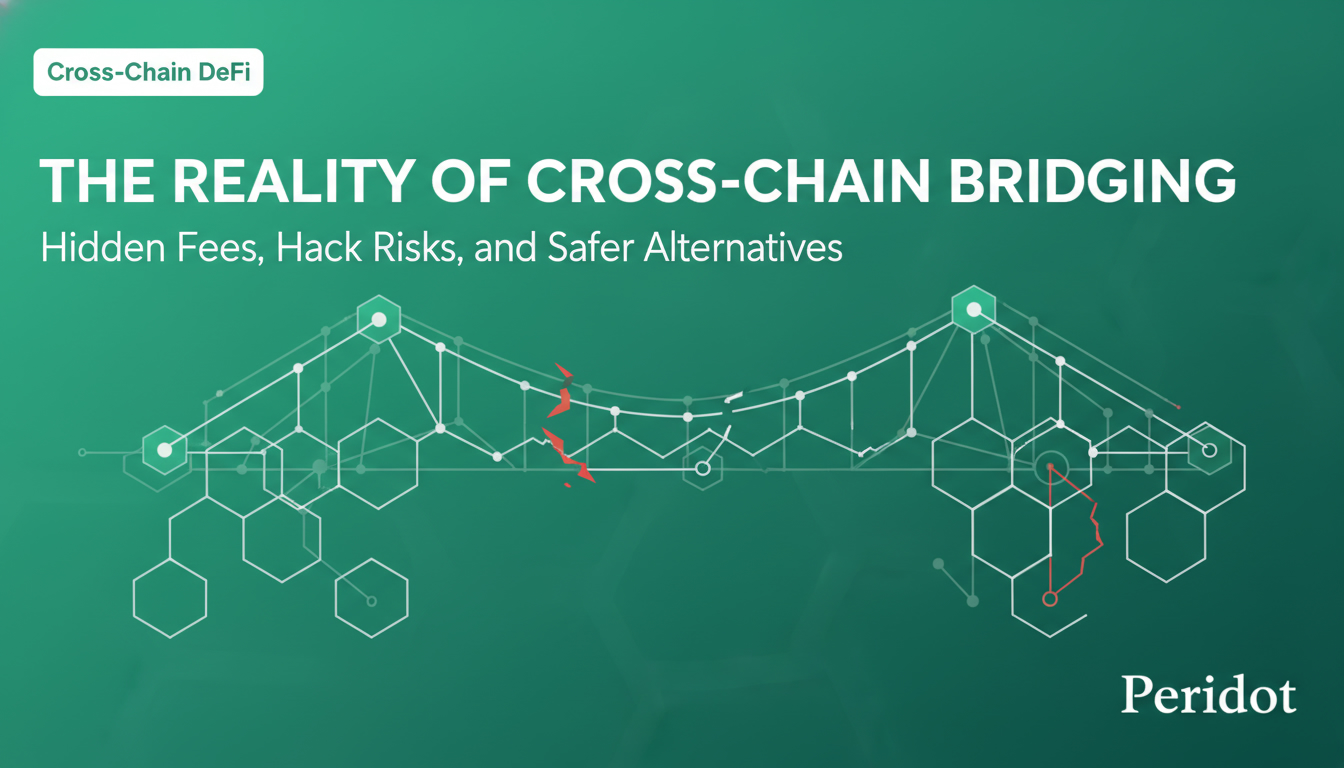
The Reality of Cross-Chain Bridging: Hidden Fees, Hack Risks, and Safer Alternatives
Alexander Meyer
March 16, 2026
6 min read
🤖
Explore this content with AI
Ask questions about this article using your favorite AI assistant. We copy the prompt for you and open a new tab.
Alexander Meyer
Alexander Meyer is a DeFi expert with over 5 years of experience in blockchain technology and decentralized finance. He has written extensively about cryptocurrency and DeFi protocols.
Frequently Asked Questions
What is cross-chain bridging in DeFi?
Cross-chain bridging allows users to transfer digital assets between different blockchain networks. It works by locking tokens on the original chain and creating equivalent tokens on the target chain, enabling interoperability across blockchains.
What are the hidden fees involved in cross-chain bridging?
Users often encounter multiple fees such as network transaction costs, bridge service charges, and sometimes conversion fees. These fees can add up and are not always transparent, making the actual cost of bridging higher than expected.
What security risks should I be aware of when using cross-chain bridges?
Cross-chain bridges can be vulnerable to hacks and exploits due to their complex infrastructure and reliance on smart contracts or centralized operators. These vulnerabilities can lead to loss of funds if the bridge is compromised.
How do centralized and decentralized bridges differ in terms of security?
Centralized bridges are managed by a single entity, which can be faster but requires trusting that operator, increasing risk if they act maliciously or are hacked. Decentralized bridges use smart contracts and multiple validators, enhancing security but sometimes at the cost of slower transaction finality.
Are there safer alternatives to traditional cross-chain bridging?
Yes, alternatives like secure cross-chain lending and margin trading platforms offer ways to interact with multiple blockchains without directly transferring assets through bridges. These methods can reduce exposure to bridge vulnerabilities while still enabling multi-chain participation.
How can platforms like Peridot improve cross-chain DeFi security?
Platforms like Peridot provide secure cross-chain lending and margin trading by using advanced protocols that minimize reliance on traditional bridges. This approach reduces hidden fees and hack risks, offering safer ways to leverage assets across different blockchains.
Share this article
Related Articles
DeFi Trading Risks
March 16, 2026
The Dark Side of DEX Aggregators: MEV Bots, Slippage, and How to Protect Your Swaps
Discover how MEV bots and slippage impact your trades on DEX aggregators and learn practical strategies to protect your swaps for more efficient, cost-effective DeFi trading.
Alexander Meyer
Read
DeFi Lending
March 16, 2026
Borrowing Against Liquid Staking Tokens: Balancing Capital Efficiency and Liquidation Risks
Explore how borrowing against Liquid Staking Tokens (LSTs) enhances capital efficiency while introducing liquidation spiral risks, and learn strategies to manage these risks in DeFi lending platforms.
Alexander Meyer
Read
DeFi Education
November 16, 2025
Understanding DeFi Lending: A Cross-Chain Guide with Peridot
Explore the fundamentals of DeFi lending, its risks and rewards, and discover how Peridot’s cross-chain platform enhances lending and borrowing opportunities in decentralized finance.
Alexander Meyer
Read