
Back to Blog
DeFi Yield Strategies
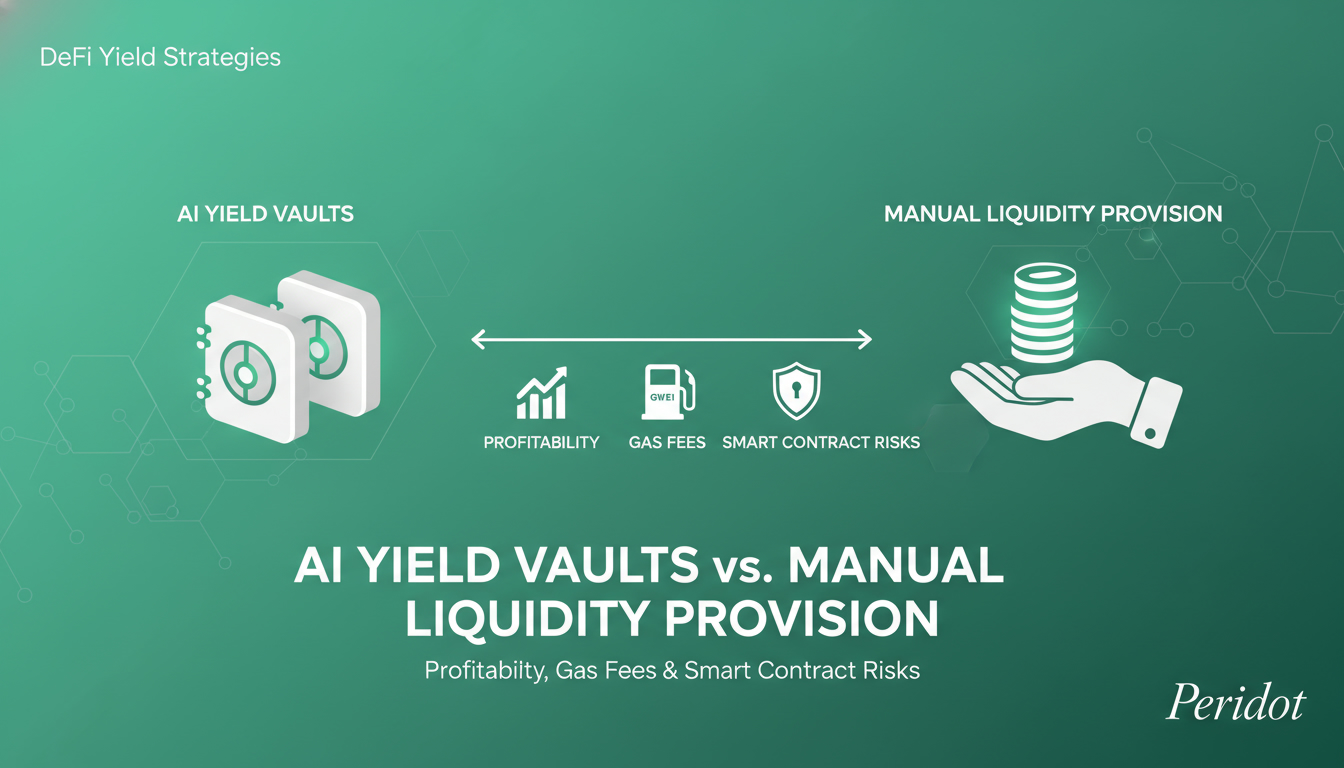
AI Yield Vaults vs. Manual Liquidity Provision: Profitability, Gas Fees & Smart Contract Risks
Peridot.Finance
March 16, 2026
6 min read
🤖
Explore this content with AI
Ask questions about this article using your favorite AI assistant. We copy the prompt for you and open a new tab.
Peridot.Finance
Frequently Asked Questions
What are AI yield vaults and how do they work?
AI yield vaults are automated DeFi strategies that use artificial intelligence to manage and optimize yield farming. They dynamically allocate funds across various protocols based on real-time market data, aiming to maximize returns while controlling risks through automated rebalancing and compounding.
How does manual liquidity provision differ from AI yield vaults?
Manual liquidity provision involves users directly depositing tokens into liquidity pools and actively managing their positions. Unlike AI vaults, it requires hands-on monitoring of pool performance, impermanent loss, and rewards without automated adjustments or risk controls.
What are the main risks associated with AI yield vaults and manual liquidity provision?
Both strategies carry smart contract risks, such as bugs or exploits, which can lead to loss of funds. Manual liquidity providers also face impermanent loss, while AI vaults add complexity risks related to algorithm performance and decision-making accuracy.
How do gas fees impact profitability in these yield strategies?
Gas fees can significantly affect net returns, especially when frequent transactions or rebalancing occur. AI yield vaults may optimize gas usage through automated batching, whereas manual liquidity provision might incur higher costs due to less efficient, user-initiated transactions.
Which strategy is better for beginners or less active DeFi users?
AI yield vaults tend to be more suitable for users who prefer automated management and want to reduce manual intervention. Manual liquidity provision requires more active monitoring and understanding of market risks, making it more appropriate for experienced users comfortable with hands-on management.
Can AI yield vaults fully eliminate risks like impermanent loss?
No, AI yield vaults aim to minimize risks through dynamic adjustments but cannot completely eliminate impermanent loss or smart contract vulnerabilities. Users should still assess risk tolerance and understand that no automated strategy is risk-free.